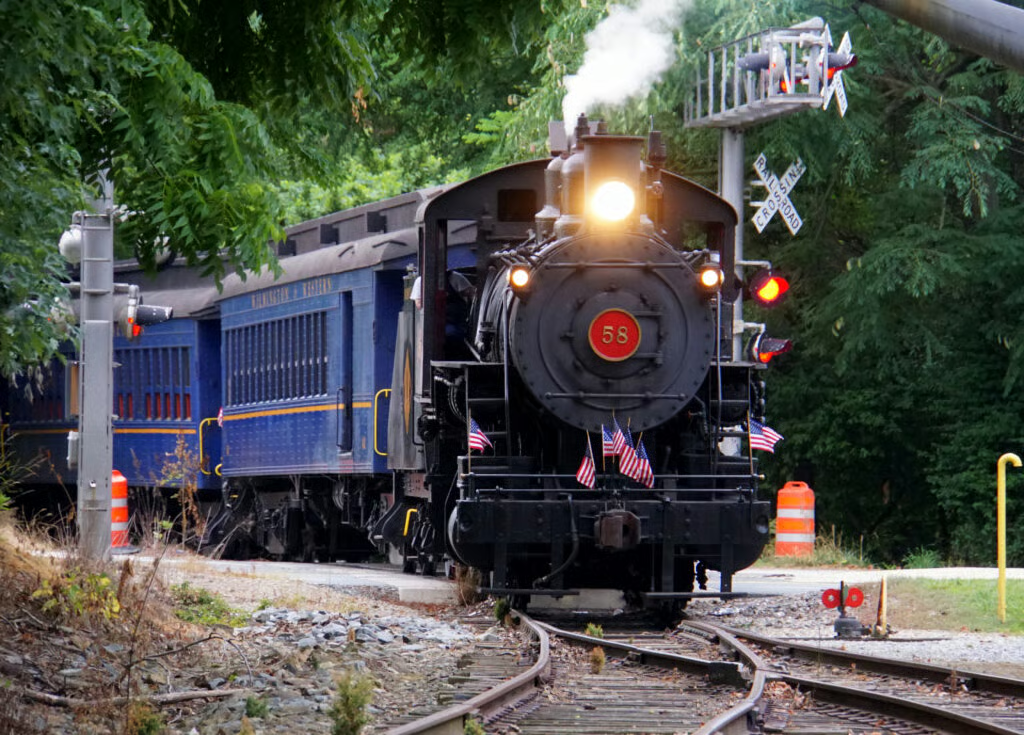
The AI boom powering Nvidia Corp. (NASDAQ:NVDA) has entered its “manic phase,” Pulitzer Prize-winning historian Liaquat Ahamed warned Friday, comparing it to the railroad frenzy that ended in the Panic of 1873.
Speaking on the Prof G Markets podcast, Ahamed said competition, overbuilding and debt could undermine returns on the vast sums pouring into data centers, even if the boom continues another year or two.
When a Powerful Railroad Financier Ran Out of Money
Railroads transformed the economy, but many of the companies financing their expansion went bankrupt.
Ahamed traced the crash to Jay Cooke, a powerful banker who raised billions for the Union during the Civil War.
Cooke then backed the Northern Pacific, a new transcontinental railroad. With hundreds of miles of track laid, investors assumed he could finance the rest.
But in September 1873, Cooke announced he couldn’t secure the necessary funding. His firm collapsed, triggering a financial panic.
As Ahamed explained, if even Cooke couldn’t raise the money, what chance did smaller railroad companies have? Within three months, railroad construction had ground to a halt, and roughly a quarter of U.S. railroad companies defaulted within a year.
Ahamed drew a modern parallel: What if OpenAI suddenly couldn’t finance its enormous AI commitments? He later identified Oracle as another company potentially vulnerable to a funding crisis.
Why Nadella May Have Learned the Wrong Lesson
Microsoft Corp. (NASDAQ:MSFT) CEO Satya Nadella has cited Ahamed’s book on 1873, saying Microsoft would be careful not to overbuild.
Ahamed said Nadella “got the wrong end of the stick.” Individual railroad companies weren’t necessarily reckless. Each kept expanding because slowing down meant surrendering business to competitors.
“It’s the collectivity of their decisions that leads to overbuilding,” he said.
Today’s hyperscalers could face the same trap.
Nvidia’s Customers Face a Debt Test
Ahamed identified three warning signs before the railroad crash: excess capacity, eroding profitability and more expensive financing. He said much of today’s AI borrowing remains opaque.
He described Nvidia as “essentially lending to its customers,” although its arrangements also involve equity investments and purchase commitments rather than conventional loans.
Nvidia has invested in CoreWeave Inc. (NASDAQ:CRWV) and entered a $6.3 billion agreement to purchase qualifying unused computing capacity through 2032. Some CoreWeave bonds yielded around 16% this week amid mounting debt concerns.
Nvidia shares fell 1.8% Thursday amid the broader AI-stock selloff.
On Polymarket, traders put the probability of a defined AI downturn by Dec. 31 at roughly 7%. The contract requires at least three specified stress events.
That low probability is consistent with Ahamed’s view that the boom could run another year or two.
Financial crises, he noted, tend to “take much longer to happen than you imagined” before they “happen much faster than you thought they could.”
Image: Shutterstock